UNIT 1
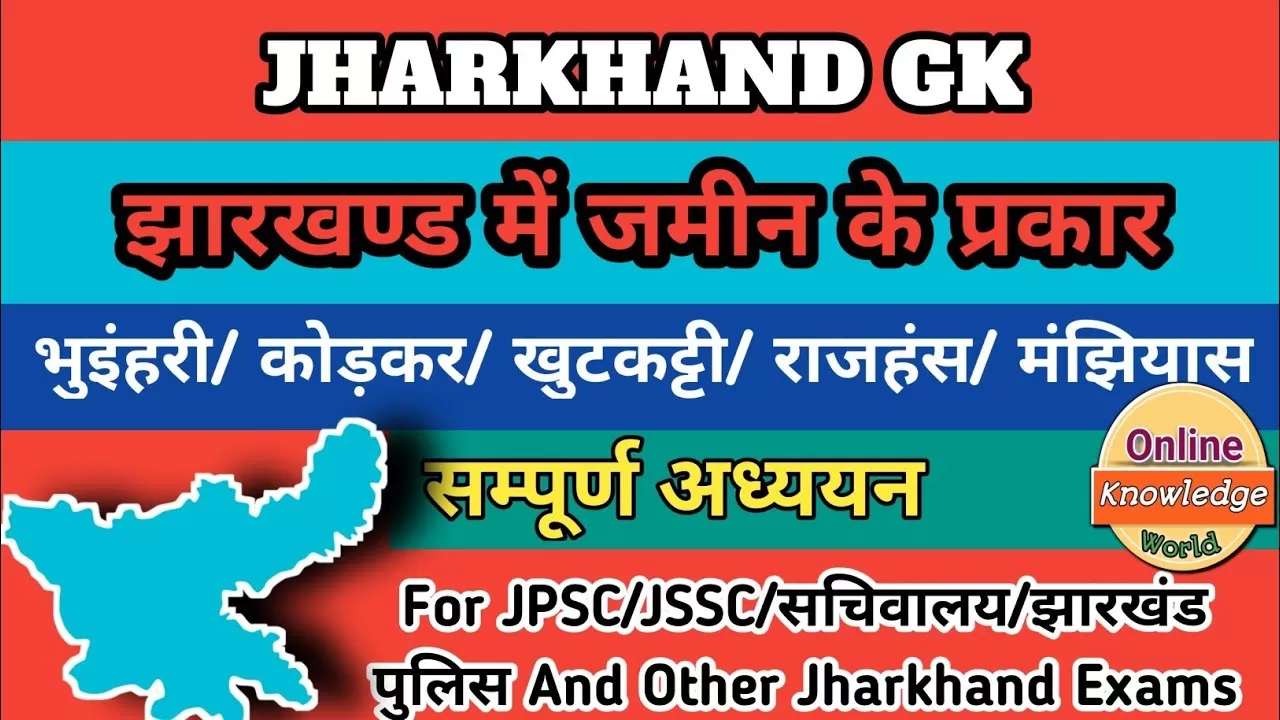
झारखंड में जमीन के प्रकार
कोड़कर भूमि – सदान या गैर आदिवासियों की भूमि को झारखंड में कोड़कर भूमि कहा जाता है।
राजहंस भूमि – यह जमीन राजाओं की जमीन थी तथा इसके अंतर्गत वह जमीन आते हैं, जो राजाओं द्वारा दान में दी गई या वितरित की गई थी।
खुटकट्टी भूमि – मुंडा आदिवासियों की भूमि को खुटकट्टी भूमि कहा जाता है।
भुईंहरी भूमि – उरांव जनजातियों की जमीन को भुईंहरी भूमि जमीन कहा जाता है।
मांझियस भूमि – जमींदारों की जमीन को मांझियस भूमि कहा जाता है। इसे वकास्त, जिरात, मन, वेटखेता के नाम से भी जाना जाता है।
गैर-मजरुवा जमीन –गैर मजरुवा जमीन दो प्रकार के होते हैं: – गैर मजरुवा खास और गैर मजरुवा आम ( गैर मजरुवा मालिक)
गैर-मजरुवा आम – यह सरकारी जमीन होता है। इस जमीन का उपयोग वहां रहने वाले समुदाय सामूहिक रूप से उपयोग करते हैं जैसे सड़क कुंआ, तालाब, मसना, सरना, श्मशान घाट इत्यादि। इस जमीन की बंदोबस्ती किसी के नाम से नहीं की जा सकती है। इसे ना खरीदा ना बेचा जा सकता है।
गैर-मजरुवा खास – इसे गैर मजरुवा मालिक जमीन भी कहा जाता है। यह सरकारी जमीन होता है। इसकी बंदोबस्ती की जा सकती है। ऐसी जमीन जो जमीदारी प्रथा के समय जमींदार के अधीन खलिहान, मवेशी के चरागाह, गौशाला आदि के रुप में थे। इस जमीन को जमीदारी प्रथा के खत्म होने के बाद सरकार ने ले तो ली पर इस जमीन पर किसी प्रकार का खेती/जोत संभव नहीं हो पाया। भू सर्वे में इस जमीन को किसी आम व्यक्ति के नाम में सर्वे नहीं किया गया। इस जमीन पर किसी का स्वामित्व नहीं हो पाया। इसी जमीन को गैरमजरूआ खास या मालिक जमीन कहा जाता है। सरकार ने भूमिहीन लोगों के लिए इसी जमीन का बंदोबस्ती किया है।
कैसर ए हिंद भूमि – केंद्र सरकार की जमीन को केसर ए हिंद जमीन कहा जाता है। इस जमीन की भी बंदोबस्ती नहीं की जा सकती है। इस जमीन का देखभाल करने का दायित्व राज्य सरकार को होता है।
खासमहल भूमि – आजादी से पहले जो अंग्रेज प्रशासक अपने सैनिकों को रखने के लिए, घोड़े को रखने के लिए, सरकारी आवास, कार्यालय को के लिए जो जमीन उपयोग करते थे उस जमीन को खासमहल वर्ग में रखा गया है। यह जमीन सरकारी जमीन होता है। साहेबगंज और मेदिनीनगर शहर की ज्यादातर भूमि खासममहल भूमि कहलाता है। यह जमीन कुछ निर्धारित समय के लिए लीज पर दिया जाता है। किंतु इसकी बंदोबस्ती नही की जा सकती है।
जंगल-झाड़ भूमि: यह वन विभाग की जमीन हो सकती है। ऐसी जमीन पर निर्माण या खरीद-बिक्री कानूनी रूप से वर्जित है।
बकास्त भूमि – जमींदारी प्रथा के समय जमींदारों के कब्जे की जमीन।
छप्परबंदी : वह ग्रामीण जमीन जिस पर घर बना लिया गया हो और उसका लगान आवासीय हिसाब से दिया जाता हो।
सर्वे और सेटलमेंट
कैडस्ट्रल सर्वे (Cadastral Survey): यह अंग्रेजों के समय (मुख्य रूप से 1902-1930 के बीच) किया गया पहला वैज्ञानिक सर्वे था। आज भी झारखंड के अधिकांश हिस्सों में इसी के आधार पर खतियान मान्य हैं। 1932 का खतियान इसी सर्वे की देन है।
रिविजनल सर्वे (Revisional Survey): यह आजादी के बाद जमीन के रिकॉर्ड को अपडेट करने के लिए किया गया था। कई जिलों में यह सर्वे पूरा हो चुका है, जबकि कुछ में अभी भी पुराना सर्वे ही चल रहा है।
जिला/क्षेत्र सर्वे का समय
रांची 1902 – 1910
सिंहभूम 1906 – 1912
हजारीबाग 1908 – 1915
पलामू 1913 – 1920
संथाल परगना 1898 – 1905 और 1922 – 1935
झारखंड की प्रमुख भू-शब्दावली
खतियान (Khatiyan): जमीन का मुख्य रिकॉर्ड जिसमें मालिक का नाम, पिता का नाम, जाति, पता और जमीन का विवरण होता है।
झारभूमि – झारखंड सरकार के राजस्व, निबंधन एवं भूमि सुधार विभाग का आधिकारिक पोर्टल है। इसका मुख्य उद्देश्य जमीन से जुड़े रिकॉर्ड्स को डिजिटल बनाना और आम जनता के लिए इसे पारदर्शी तरीके से उपलब्ध कराना है।
पर्चा (Parcha): सर्वे के दौरान रैयत (किसान) को दी जाने वाली जमीन की कच्ची कॉपी।
रजिस्टर-II (Register-II): अंचल कार्यालय (Block Office) में रखा जाने वाला रजिस्टर, जिसमें वर्तमान मालिक और लगान का विवरण होता है।
शुद्धि पत्र (Correction Slip): दाखिल-खारिज (Mutation) होने के बाद जो कागज मिलता है, उसे शुद्धि पत्र कहते हैं।
वशांवली (Vanshavali): परिवार का वंश वृक्ष, जो यह साबित करता है कि आप खतियानी मालिक के वंशज हैं।
दाखिल-खारिज (Mutation): पुराने मालिक का नाम हटाकर नए मालिक का नाम सरकारी रिकॉर्ड में दर्ज करना।
लगान (Lagan): जमीन पर सरकार को दिया जाने वाला वार्षिक कर (Tax)।
बंदोबस्ती (Settlement): सरकार द्वारा किसी भूमिहीन को या खास मकसद से जमीन आवंटित करना।
गैर-मजरुआ (Gair Mazarua): वह जमीन जिसका कोई निजी मालिक न हो (सरकारी जमीन)।
छप्परबंदी (Chhapparbandi): खेती की जमीन पर घर बनाने की अनुमति या उसका आवासीय टैक्स।
रकबा (Rakba): जमीन का कुल क्षेत्रफल (Area)।
डीह (Deeh): वह जमीन जहाँ पुराना घर बना हो या बस्ती हो।
खसरा – खसरा नंबर जमीन के एक विशेष टुकड़े (Plot) की पहचान संख्या है।
मौजा (Mauja): एक राजस्व ग्राम (Revenue Village)। हर मौजा का एक अलग नंबर होता है जिसे J.L. Number कहते हैं।
हल्का (Halka): एक राजस्व कर्मचारी (Karmachari) के अधीन आने वाले कई गांवों का समूह।
चौहद्दी (Chauhaddi): प्लॉट के चारों दिशाओं (उत्तर, दक्षिण, पूर्व, पश्चिम) में मौजूद पड़ोसियों या रास्तों का विवरण।
रैयत (Raiyat): वह व्यक्ति जिसे जमीन पर खेती करने और रहने का कानूनी अधिकार प्राप्त है (जमीन का मालिक)।
शिकोमी (Shikomi): वह व्यक्ति जो किसी दूसरे की जमीन पर बटाई या समझौते पर खेती करता है (इसका मालिकाना हक नहीं होता)।
बैनमा / डीड (Deed): जमीन की रजिस्ट्री का मूल दस्तावेज।
केवाला (Kewala): पुराने समय में जमीन की खरीद-बिक्री के दस्तावेज को केवाला कहा जाता था।
गैर-हस्तांतरणीय (Non-transferable): वैसी जमीन जिसे कानूनन बेचा नहीं जा सकता (जैसे SPT एक्ट के तहत आने वाली जमीन)।
बारी (Bari) घर से सटा हुआ बागीचा या छोटी खेती वाली जमीन।
परती (Parti) वह जमीन जिस पर फिलहाल खेती नहीं की जा रही (खाली जमीन)।
बहाल (Bahal) वह जमीन जो उपजाऊ और खेती के लिए उत्तम है।
नाला / गरहा: जल निकासी का मार्ग या गड्ढे वाली जमीन।
Types of land in Jharkhand
Kodkar Land – The land of Sadan or non-tribals is called Kodkar Land in Jharkhand.
Rajhans Land – This land was the land of the kings and it included the land which was donated or distributed by the kings.
Khutkattti Land- The land of the Munda tribals is called Khutkattti Land.
Bhuinhari Land- The land of Oraon tribes is called Bhuinhari Land.
Manjhias land – The land of the landlords is called Manjhias land. It is also known as Vakasta, Jirat, Man, Vetkheta.
Gair- Majurua Land – Gair- Majurua land is of two types :- Gair- Majurua Aam and Non-cultivated aam (Non-cultivated owner)
Gair- Majurua Aam – This is government land. This land is used collectively by the communities living there for purposes such as road, well, pond, Masna, Sarna, cremation ground etc. This land cannot be settled in anyone’s name. It can neither be bought nor sold.
Gair- Majurua khas – It is also called non-cultivated owner land. It is government land. It can be settled. Such land which during the time of the Zamindari system was under the control of the Zamindar in the form of barn, cattle pasture, cowshed etc. Although the government took over this land after the end of the Zamindari system, any kind of farming/cultivation was not possible on this land. In the land survey, this land was not surveyed in the name of any common person. No one could own this land. This land is called Gairmajrua Khas or Malik land. The government has arranged this land for the landless people.
Kaiser-e-Hind land – The land of the central government is called Kaiser-e-Hind land. This land also cannot be settled. The state government is responsible for taking care of this land.
Khasmahal land – Before independence, the land which was used by British administrators to keep their soldiers, to keep horses, for government residence, offices etc. That land has been kept in the Khasmahal category. This land is government land. Most of the land in Sahebganj and Medininagar city is called Khasmahal land. This land is given on lease for a fixed period of time. But it cannot be settled.
Forest land: This may be forest land owned by the Forest Department. Construction or the purchase and sale of such land is legally prohibited.
Bakast land – Land occupied by landlords during the Zamindari system.
Chhaparbandi: Rural land on which a house has been built and its rent is paid on residential basis.
Survey and settlement
Cadastral Survey: This was the first scientific survey conducted during the British period (mainly between 1902 and 1930). Even today, Khatiyans based on this are valid in most parts of Jharkhand. The 1932 Khatiyan is a result of this survey.
Revisional Survey: This survey was conducted after independence to update land records. In many districts, the survey has been completed, while in others, the old survey is still ongoing.
District/Area Survey Timing
Ranchi 1902 – 1910
Singhbhum 1906 – 1912
Hazaribagh 1908 – 1915
Palamu 1913 – 1920
Santhal Parganas 1898–1905 and 1922–1935
Major Geo-Glossary of Jharkhand
Khatiyan: The main record of the land containing the name of the owner, father’s name, caste, address and details of the land.
JharBhoomi – It is the official portal of the Revenue, Registration and Land Reforms Department of the Government of Jharkhand. Its primary objective is to digitize land records and make them transparently available to the public.
Parcha: A rough copy of the land given to the Raiyat (farmer) during the survey.
Register-II: Register maintained in the Block Office, containing details of the current owner and rent.
Correction Slip: The paper that is received after mutation is called correction slip.
Vanshavali: The family tree, which proves that you are a descendant of the Khatiyani owner.
Mutation: Removing the name of the old owner and entering the name of the new owner in the government records.
Lagan: Annual tax paid to the government on land.
Settlement: Allotment of land by the government to a landless person or for a specific purpose.
Gair Mazarua: Land that has no private owner (government land).
Chhappardi: Permission to build a house on agricultural land or its residential tax.
Rakba: Total area of the land.
Deeh: The land where an old house is built or there is a settlement.
Khasra – Khasra number is the identification number of a particular piece of land (plot).
Mauja: A revenue village. Each Mauja has a unique number called a J.L. Number.
Halka: A group of several villages under the jurisdiction of a revenue officer.
Chauhaddi: Details of neighbours or roads present in all four directions (North, South, East, West) of the plot.
Raiyat: A person who has the legal right to cultivate and live on the land (owner of the land).
Shikomi: A person who cultivates someone else’s land on a sharecropping or contract basis (does not own it).
Benana/Deed: The original document of land registration.
Kewala: In olden times, the document of purchase and sale of land was called Kewala.
Non-transferable: Land that cannot be legally sold (such as land covered under the SPT Act).
Bari: A garden or small cultivated land adjacent to the house.
Pariti is the land which is not currently being cultivated (vacant land).
Bahal: Land which is fertile and good for farming.
Nala/Garha: Drainage channel or pitted land.